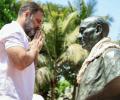
Congress leader Rahul Gandhi on Wednesday criticized the Waqf (Amendment) Act, calling it anti-constitutional and an attack on freedom of religion. He warned that the BJP-RSS will soon target the rights of other minorities, such as Christians and Sikhs. Gandhi also accused Prime Minister Narendra Modi of succumbing to pressure from US President Donald Trump on the imposition of tariffs, citing a recent meeting between the two leaders. He also questioned PM Modi's recent meeting with Bangladeshi leader Mohammad Yunus, who has been critical of India's policies. Gandhi further advocated for a caste census in India, stating that Congress aims to break the barrier of 50% reservation.
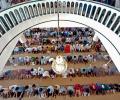
The All India Muslim Personal Law Board (AIMPLB) has urged Muslims to wear a black armband on their right hand during Juma prayers on the last Friday of Ramzan as a mark of protest against the Waqf (Amendment) Bill. The AIMPLB has been vocal in its opposition to the Bill, calling it "controversial, discriminatory and damaging." The organization has planned nationwide protests against the Bill, with large sit-ins scheduled in several cities.

'Experts and stakeholders have raised concern over the refund provision in the draft Bill. That was a drafting error, which will be rectified,' a government official said.

Simplifying GST rates, removing exemptions, easing disputes, and speeding up refunds can boost investment in India and offer the best reply to Trump's tariffs, observes V S Krishnan, former member, Central Board of Indirect Taxes and Customs.
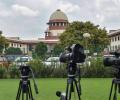
The Supreme Court on Monday dedicated a web page containing details of arguments, written submissions and the judgment in the historic Kesavananda Bharati case which laid down the path-breaking concept of the 'Basic Structure' of the Constitution.
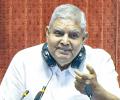
'Modi's charisma may have weakened as last year's Lok Sabha poll results showed but in the eyes of the Sangh Parivar, it has not waned.' 'Minus a strong BJP government at the Centre for another decade and more, there is apprehension that an anti-Hindutva government could reverse many of the ideological gains that the Modi dispensation has achieved through its three terms,' points out N Sathiya Moorthy.

Fourth-term Bharatiya Janata Party MP Nishikant Dubey, one of the more vocal party members in the Lok Sabha, launched a broadside against the Supreme Court on Saturday, saying Parliament and state assemblies should be closed down if the apex court has to make the laws.
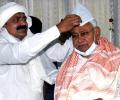
'Muslims in Bihar under Nitishji's rule are safest than anywhere else.'
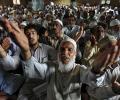
The All India Muslim Personal Law Board (AIMPLB) has announced its intention to challenge the Waqf (Amendment) Bill in court, labeling it a "black law" that threatens the community's rights. The AIMPLB, a major organization representing Muslims in India, asserts that the Bill, if passed, would lead to the seizure of Muslim properties and undermine the autonomy of Waqf Boards. The organization plans to launch nationwide protests against the Bill, echoing the farmers' agitation, and has urged all citizens to resist the legislation. The Bill has been met with criticism from various quarters, including opposition parties, who claim that the Centre is rushing it through Parliament without adequately addressing concerns raised by the Joint Parliamentary Committee (JPC).
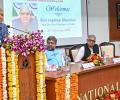
Vice President Jagdeep Dhankhar has questioned the Chief Justice of India's involvement in executive appointments, specifically citing the selection of the CBI director. He believes this practice undermines democratic principles and calls for revisiting the existing norms. Dhankhar also raised concerns about the "doctrine of basic structure", suggesting it has a debatable jurisprudential basis. He emphasized the importance of each institution operating within its constitutional boundaries and highlighted the need for coordinated autonomy. The vice president also discussed the need for a balanced approach to judicial review and the importance of judges focusing on judgments rather than other forms of expression. He stressed the need to revisit the current state of affairs to restore the judiciary's sublimity.

On his 200th birth anniversary, Utkarsh Mishra traces the life, thought, and legacy of Dadabhai Naoroji, the Grand Old Man of India.

There are no major legal complications in implementing the bill right now but the Narendra Modi government putting it off for 10 years, he said.
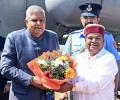
Karnataka Governor Thaawarchand Gehlot has reserved the Bill pertaining to four percent reservation for Muslims in government contracts for the President's assent, citing constitutional concerns. The Bill, which has been a subject of controversy in Karnataka, was passed by both houses of the state legislature amid protests from the opposition BJP. The Governor's decision to reserve the Bill highlights the ongoing debate over the constitutionality of religious-based reservations in India.
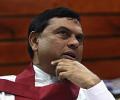
Sri Lanka's Minister for Economic Development, Basil Rajapakse's visit to New Delhi on Thursday for what is described as "regular high level consultations" comes shortly before a scheduled meeting of a Parliamentary Select Committee for Constitutional Amendments on July 9.

The situation in these violence-hit places remained tense on Saturday morning, but no untoward incident was reported, officials said.

Two important Corps Commands at Multan and Bahawalpur, as also the posts of Adjutant General and Quartermaster General at General Headquarters now stand vacant, reveals Rana Banerji, who headed the Pakistan desk at RA&W.

The Supreme Court of India has censured BJP MP Nishikant Dubey for his remarks against the judiciary, stating that his comments "tend to scandalize and lower the authority of the Supreme Court of India." The court dismissed a contempt petition against Dubey but issued a scathing order criticizing his remarks, which included accusations that the court was "taking the country towards anarchy" and that Chief Justice Sanjiv Khanna was "responsible for the civil wars taking place in the country." The court deemed Dubey's statements "highly irresponsible" and indicative of an attempt to "incite religious wars." The order highlighted the importance of maintaining public confidence in the judiciary and condemned attempts to undermine its authority.

The Supreme Court, by a majority view of 3:2, upheld the validity of the 103rd Constitution amendment providing 10 per cent reservation to people belonging to economically weaker sections (EWS) in admissions and government jobs.

Union Law Minister Arjun Ram Meghwal on Wednesday moved the women's reservation bill for passage in the Lok Sabha, saying it is a very important bill and urging members to pass it with unanimity.
The Supreme Court declined to examine a plea challenging a PMLA provision, stating the issue lies in the law's abuse, not the law itself. The court allowed the petitioner to approach the High Court if procedures weren't followed.

Patel emphasised that one of the most important features of the bill is the establishment of a dedicated tribunal for resolving disputes, reducing the burden on the judiciary and ensuring quicker justice.
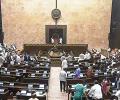
The Rajya Sabha, India's upper house of parliament, witnessed its second-longest sitting in history on Thursday, lasting until 4:02 am the next day. The House convened to clear the Waqf (Amendment) Bill and approve the statutory resolution on the imposition of President's Rule in Manipur. The longest sitting in Rajya Sabha history occurred on September 17, 1981, when the House sat until 4:43 am to pass the Essential Services Maintenance Bill.
'It is not as if Hindus are not being touched at all, and only Muslims are.'
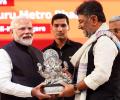
'But I know why he did it.' 'He was being heckled by BJP members who were mocking the Congress.' 'In that context, he quoted the song to tell them: "We know your anthem, we know your ideology, we know how divisive you are".' 'It was not an endorsement.'

Opposition parties Nationalist Congress Party and Samajwadi Party on Wednesday demanded reservation for OBCs in the women's reservation bill and questioned the reason for calling a special session when the bill cannot be implemented before census and delimitation.

The Supreme Court of India has agreed to hear on May 6 the pleas of the Kerala government against the governor over the delay in approving bills passed by the state assembly. The court will consider whether the issues raised in the Kerala petition are covered by a recent judgment on a similar plea by Tamil Nadu, which set timelines for governors and the President on granting assent to bills.

In October 2024, Jindal Stainless challenged a Goods and Services Tax (GST) notice in the Delhi high court. It was about corporate guarantees issued to related parties by its former group company, Jindal Stainless (Hisar), before their merger in March 2023.
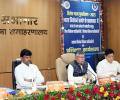
'The Election Commission is conducting the National Register of Citizens in Bihar through the backdoor.'

On Tuesday, Leader of Opposition Rahul Gandhi accused BJP MP Anurag Thakur of "abusing and insulting" him during the Lok Sabha discussion on the Union Budget.
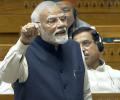
Prime Minister Narendra Modi on Saturday launched a scathing attack on the Congress party, accusing it of repeatedly "wounding" the Indian Constitution. He claimed that the Congress, driven by its "lust for power," has consistently undermined the principles of the Constitution. Modi, however, praised India's democratic journey since its independence, highlighting the country's strong democratic roots and its unwavering commitment to its founding principles. He underscored the importance of unity for India's future development and emphasized that the Constitution is the bedrock of that unity.

Tamil Nadu Chief Minister and DMK president M K Stalin announced that his party will file a case in the Supreme Court against the Waqf Bill passed in the Lok Sabha. The opposition AIADMK expressed solidarity with the DMK's stance, while the BJP members staged a walkout from the Assembly in protest. The CM argued that the amendment was passed at the behest of a few allies despite opposition from majority parties and that it is an attack on the Constitution and religious harmony. The DMK claims the bill threatens the autonomy of the Waqf Board and the Muslim minority population.

Caste census politics took centre stage on Thursday with the Congress terming the government's decision as a 'diversionary tactic' and a move for headlines management and the Bharatiya Janata Party saying it has exposed the difference between the Centre's 'true intentions' and the 'empty sloganeering' of the opposition party.

The Supreme Court of India has ruled that the secular nature of the state does not prevent it from interfering with religious practices and attitudes when they impede development and the right to equality in the larger public interest. The court dismissed pleas challenging the 1976 amendment to the Constitution, which added the terms "socialist", "secular", and "integrity" to the Preamble, stating that Parliament's amending power extends to the Preamble as well.

Tamil Nadu's ruling Dravida Munnetra Kazhagam on Monday sought a review of the November 7 verdict of the Supreme Court which upheld 10 per cent reservation for the economically weaker sections (EWS) in educational institutions and government jobs that excluded the poor among the SC/ST/OBC categories, contending that it "legitimises discrimination".
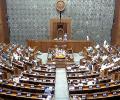
The Parliament session is set to start today, with various issues slated to be discussed, including the Waqf Act (Amendment) Bill.

Saying the law doesn't recognise the concept of marital rape, the Delhi high court has quashed an order directing prosecution of a man for performing 'unnatural' sex with his wife.
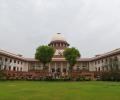
A Governor does not possess any discretion in exercise of functions under Article 200 of the Constitution in respect to any bill presented to them and must mandatorily abide by the advice tendered by the council of ministers, the Supreme Court has held.

The Supreme Court of India began hearing a batch of petitions challenging the constitutional validity of the Waqf (Amendment) Act, 2025. The bench, led by Chief Justice Sanjiv Khanna, asked both sides to address whether the court should entertain the petitions or relegate them to the high court. The hearing is underway with senior advocate Kapil Sibal arguing for the petitioners. The act, which was passed by Parliament following heated debates, has been challenged by various parties including AIMIM leader Asaduddin Owaisi, All India Muslim Personal Law Board (AIMPLB), and Jamiat Ulama-i-Hind.

On February 1, grappling with the intractable issue of the AMU's minority status, the top court said the 1981 amendment to the AMU Act, which effectively accorded it a minority status, only did a "half-hearted job" and did not restore the institution the position it had prior to 1951.

Right to apprenticeship, legal guarantee for MSP, passing a constitutional amendment to raise the 50 per cent cap on reservations for SCs, STs and OBCs, a nation-wide caste census and scrapping of Agnipath scheme are among the promises made by the Congress in its Lok Sabha polls manifesto released on Friday.
